
The Road to Heaven Kutch drive is widely considered the most beautiful and surreal road trip in India. If you are planning a visit to the Great Rann, this journey must be at the top of your bucket list.
I remember pulling off the Khavda highway, looking at the map, and feeling a sudden surge of doubt. The map showed a thin black line slicing straight through what looked like nothing but white emptiness. I paused, took a deep breath, and drove onto the “Road to Heaven.” That moment of pure silence and endless horizon changed my perspective on Kutch entirely.
Most travel guides romanticize the Rann of Kutch, focusing solely on the Rann Utsav. But they often miss the practical magic and the raw, untouched beauty hidden just a few kilometers away. The Road to Heaven is not just a scenic drive—it’s the fastest, most surreal route connecting the northern tip of Kutch to the ancient wonders of Dholavira. If you skip this 65 km stretch, you’ve missed the core of the White Desert experience.
Here is your no-nonsense, logistical, and photography guide to India’s most unique and breath taking road trip. Get ready to feel like you’re driving on another planet.
Why This Road is Kutch’s Best-Kept Secret
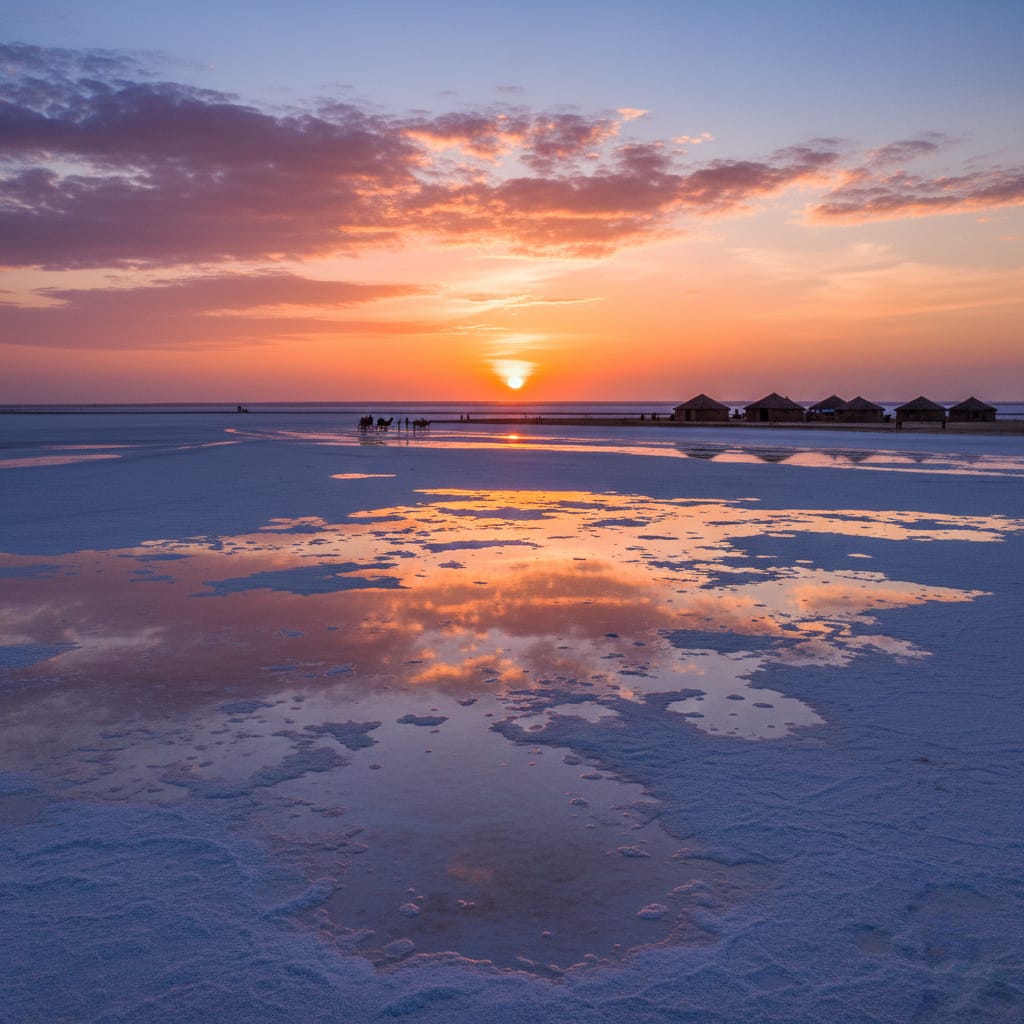
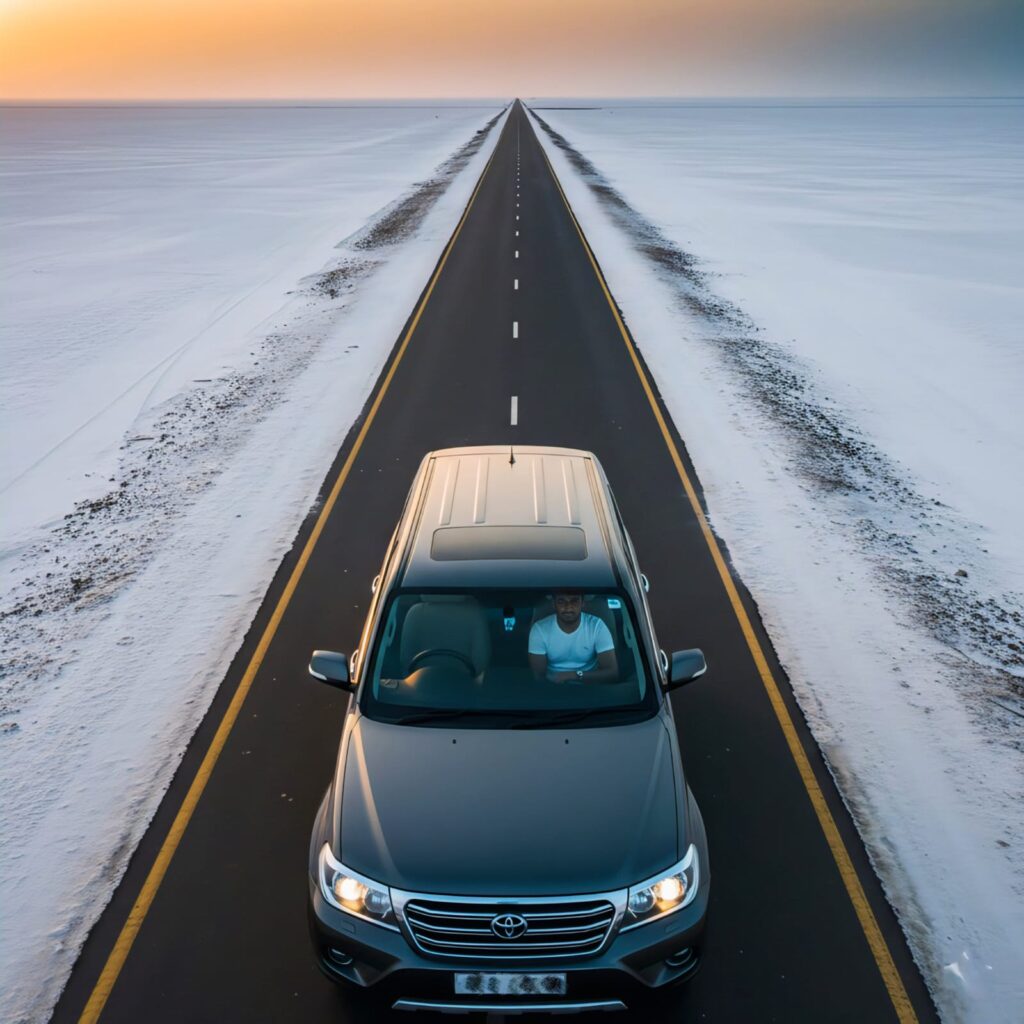
The Road to Heaven is a beautifully laid asphalt strip that cuts directly through a vast expanse of the Rann lakebed. In winter, when the water has evaporated, it is flanked on both sides by the blindingly white, crystallized salt flats. It genuinely feels like you are driving on a black ribbon floating over an endless sheet of white.
Unlike the crowded Rann Utsav areas, this road offers an unadulterated, serene, and almost meditative experience of the White Desert. It’s where you find true solitude and uninterrupted views.
Essential Logistics: Planning Your Drive (Don’t Skip This!)
This section will save you time, fuel, and frustration. Pay attention!
- Distance & Time: The primary scenic stretch is roughly 65 km one-way (from Khavda towards Dholavira). Non-stop driving takes about 1.5 hours. However, for photography, breaks, and simply soaking it all in, budget at least 4-5 hours for the return trip.
- Permit Check: The standard Rann of Kutch permit (which you get online or at the Bhirandiyara Check Post on the way to Dhordo) is sufficient for this drive. Make sure you have it, preferably a hard copy and a soft copy on your phone, as network can be spotty.
- Fuel Warning (The Critical Tip): This stretch has ZERO petrol pumps, repair shops, or dhabas. You must tank up in Bhuj or Rapar before starting this loop. Your car’s fuel gauge is the only friend you’ll have for potentially 150 km or more.
- Best Vehicle: A high-ground clearance vehicle (like an SUV) is always recommended for the general Kutch region due to varying road conditions, but the Road to Heaven itself is a well-maintained, smooth asphalt road, perfectly fine for any car.
When Does the Road Look Best?
The timing and light dramatically change the landscape, offering different visual experiences:
- Winter (November – February): This is the “White Rann” season. The water has fully evaporated, leaving the brilliant white salt crust on both sides. The ideal window for breathtaking photos is December to January, especially around sunrise or sunset.
- Monsoon (July – September): The Rann fills up with water. While driving can be slightly trickier, the view is spectacular—it truly looks like you are floating on a vast blue lake. This is a lesser-known but equally mesmerizing experience.
The Route Breakdown: 5 Must-Stop Photo Points
(Drive from Khavda towards Dholavira. Remember to always pull over safely and be mindful of other vehicles.)
- The Entry Point Marker: As you leave Khavda and head towards Dholavira, there’s a subtle but distinct shift in the landscape. Look for the point where the green arid land gives way to the endless white expanse. It’s your official “Welcome to Heaven” sign!
- The Midpoint Mirage: Around the 30 km mark, the road stretches into the horizon with seemingly infinite salt flats on both sides. This is the most iconic spot for those “road-to-infinity” shots. This is where you truly feel dwarfed by nature’s grandeur.
- The Seasonal Flamingo Spot: (Seasonal: November – December). Keep an eye out for shallow pockets of water or damp areas where migratory flamingos and other birds often gather. Binoculars will enhance this experience!
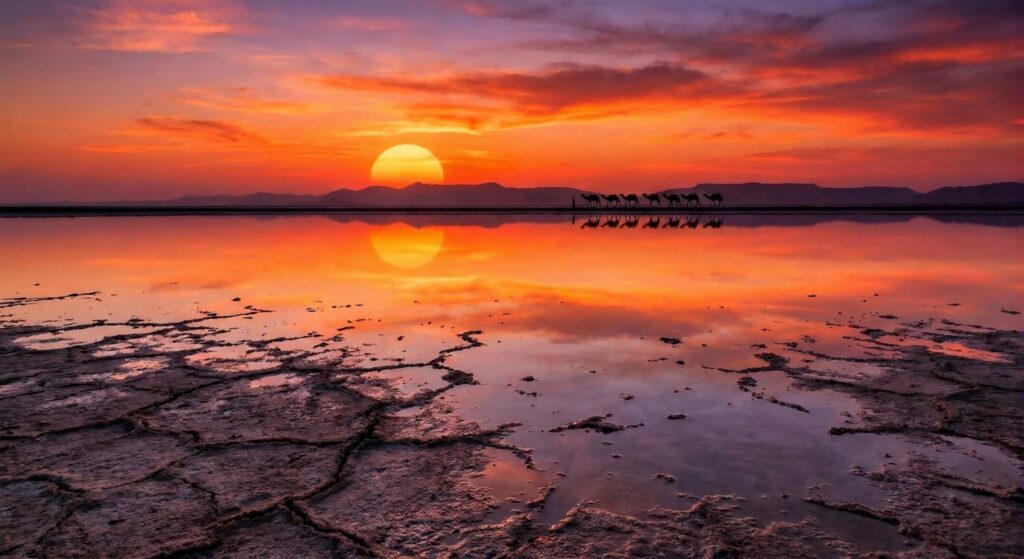
- The Kalo Dungar Silhouette View: While Kalo Dungar (Black Hill) is a separate destination, you get excellent, clear views of its unique silhouette from the western end of this road, especially during golden hour. It provides a dramatic backdrop.
- The Dholavira Gateway: This is the point where the stark white salt landscape gradually transitions back to more earthy tones, signaling your arrival near the ancient Harappan site. It’s a good spot to reflect on the journey you just completed.
Safety, Food, and Driving Tips (Don’t Ignore These)
- No Food or Water: I cannot stress this enough. There are zero shops, dhabas, or water sources on this entire stretch. Pack ample water, energy bars, and snacks for a full day. Your survival kit.
- Driving at Night: Avoid this at all costs. The area is extremely dark, there’s no street lighting, and wildlife (like nilgai or jackals) frequently crosses the road. Plan to be off this scenic stretch by 6:00 PM latest.
- The Glare: The brilliant white salt reflects sunlight intensely. Always wear high-quality UV sunglasses and keep your car windows clean for visibility. The glare can be blinding.
- Respect the Silence: For five minutes, turn the engine off, step out, and just listen to the profound silence. It is a defining Kutch moment that photos cannot capture.
- No Off-Roading: Stick to the paved road. The salt flats might look solid, but hidden marshy patches can easily trap your vehicle.
- Local Etiquette: No littering. The Rann is a fragile ecosystem. Carry a trash bag and bring all your waste back with you.
Is It Worth the Detour?
If your goal is to experience the raw, unadulterated beauty of the Great Rann of Kutch—to truly feel like you are on an expedition, not just a typical tourist trip—then the Road to Heaven is non-negotiable. It is the perfect blend of engineering wonder and natural majesty, leaving you with memories that will last a lifetime.
Pack your bags, fill your tank, and prepare for a drive that will reset your senses.
Is the Road to Heaven made of asphalt?
Yes, it is a well-maintained, black-top road. It is not an off-road track, ensuring a smooth drive.
Can a Sedan drive on this road?
Yes, absolutely. The road surface is smooth, making it accessible for sedans. Just drive carefully when pulling off to the side for photos, and avoid venturing onto the salt flats.
How far is the Road to Heaven from Bhuj?
Bhuj is approximately 150 km (3.5 to 4 hours drive) from the starting point of the scenic “Road to Heaven” route near Khavda. Plan your journey accordingly.